Practical reader guide
What to Look For in a Preschool Activity Book for Ages 2 to 5
Choose a preschool activity book with clear pages, varied practice and short activities suited to shared learning.
Match the page to the child
Children ages 2 to 5 develop at different rates. Choose pages that feel inviting and leave room for success. A younger child may enjoy pointing, matching and colouring before controlled tracing.
The age on a cover is a guide. Watch the child’s interest, hand comfort and ability to follow the page.
Look for one clear task at a time
Simple page layouts help a child understand where to begin. Large spaces, clear examples and short directions support shared practice with an adult.
- Large tracing paths
- Simple matching and search activities
- Letters paired with sounds or familiar words
- Short number and shape activities
- Playful review through colouring or mazes
Connect the page to real life
Point out letters on signs, packages and favourite books. Count toys. Name shapes during a walk. Talk about colours while drawing.
Reading Rockets suggests activities that connect letters and sounds to familiar books and everyday settings. Workbook practice works best beside conversation, reading and play.
Keep sessions short and positive
Stop before the child becomes tired. Let them choose between two pages. Praise attention and effort instead of perfect marks.
An activity book should support shared learning, not replace reading aloud, movement, conversation or imaginative play.
Review the five-part mix
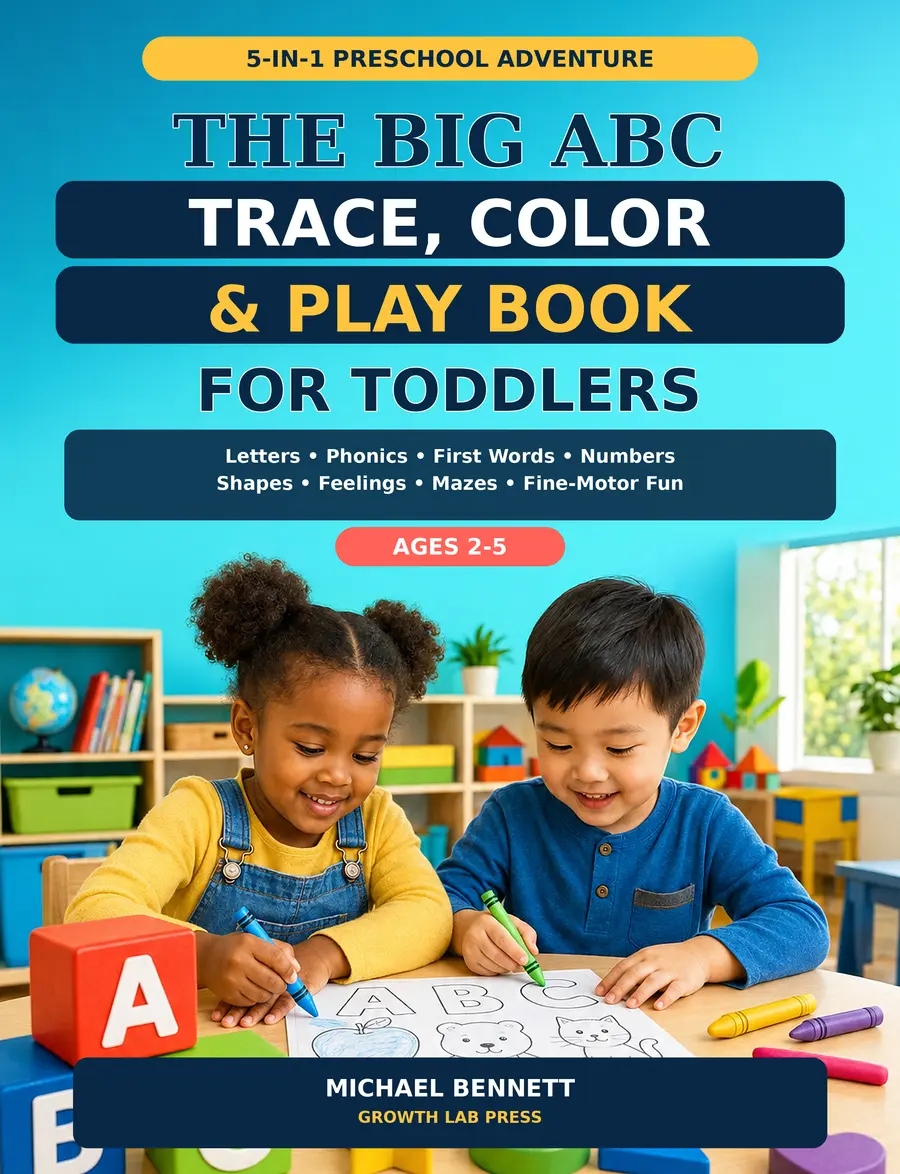
The Big ABC Trace, Color & Play Book brings letter tracing, phonics, first words, numbers, shapes, feelings and mazes into one preschool book for ages 2 to 5.
Common questions
Questions readers ask
How long should a preschool workbook session last?
Keep it short and follow the child’s interest. A few focused minutes often work better than finishing many pages.
Should a child complete the book in order?
No. Choose pages that match current interests and skills, then return to other activities later.
Does tracing replace shared reading?
No. Tracing is one activity. Children also benefit from reading, conversation, movement and play with supportive adults.
Sources
Qualified references used for this guide
Growth Lab Press guides provide general information. They do not replace medical, mental health, educational or legal advice.